01 Apr 2026•Blackline Studio•15 min read
Profile GlassInterior TrendsGlass Partitions
Profile glass work is moving away from basic clear-partition installs. In 2026, clients in Surat are asking for profile systems that create zones, soften views, and still keep interiors bright. That is why reeded glass, light tints, and slimmer frame proportions are showing up more often in premium residential and commercial projects.
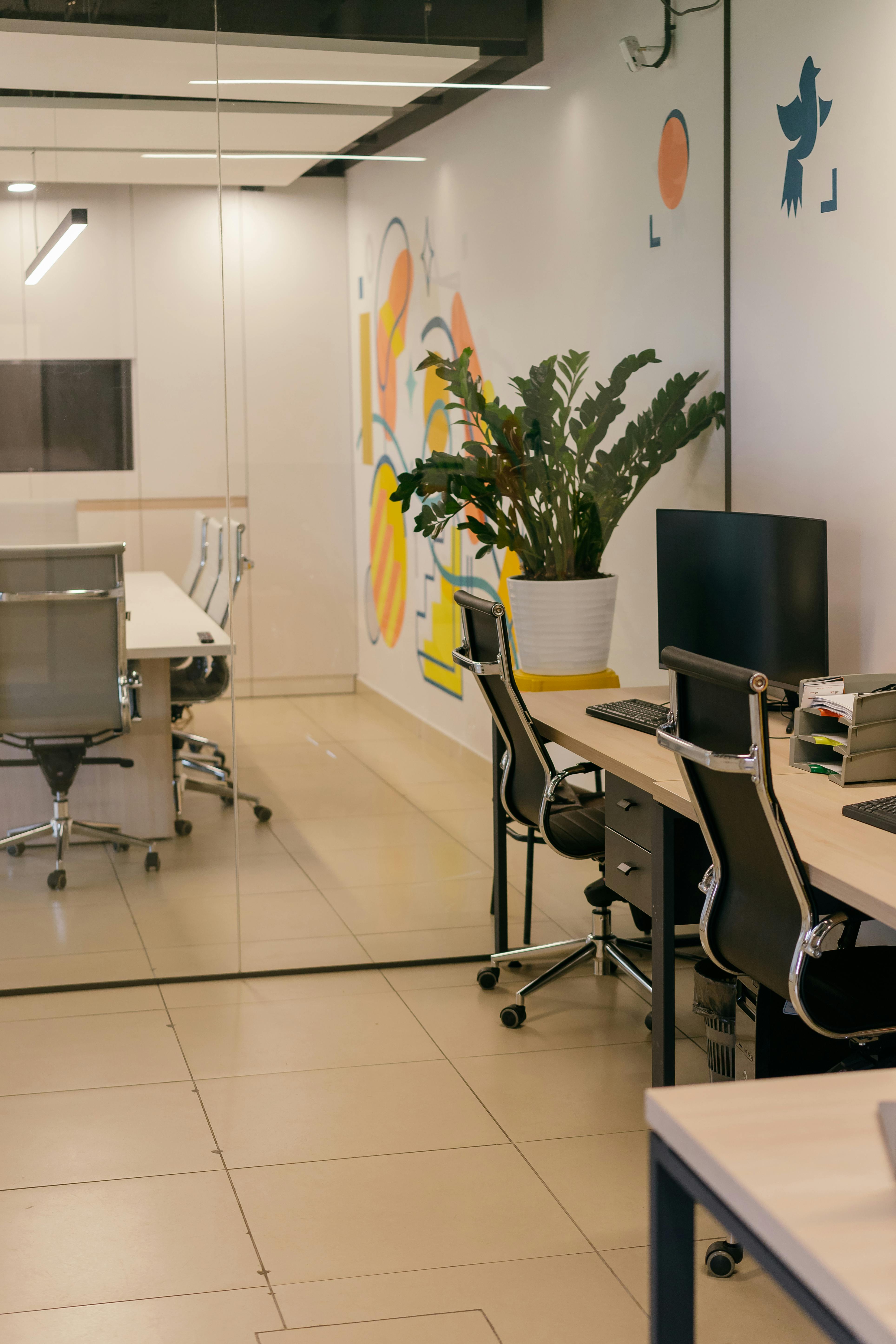
Why this category is trending now
- Decorative and textured glass is returning as a design feature, not only a privacy device.
- Open layouts are being divided into smaller mood-based zones, and profile glass partitions do that without making spaces feel closed or dark.
- Warmer interiors need materials that diffuse light gently and add texture without heavy visual clutter.
- Clients want privacy for studies, dressing areas, meeting cabins, and pantry transitions without giving up openness.
The profile glass looks leading 2026
- Reeded or fluted glass with slim black, champagne, or bronze profiles: ideal for living-dining dividers, study corners, and premium office cabins.
- Light smoked or tinted glass: useful when a softer visual boundary is needed without the heaviness of opaque partitions.
- Fixed-plus-sliding combinations: a practical choice for layouts that need flexibility between openness and controlled privacy.
The trend is not about copying one Pinterest reference. It is about controlling visibility, reflections, frame thickness, and movement so the glass becomes part of the architecture instead of a decorative afterthought.
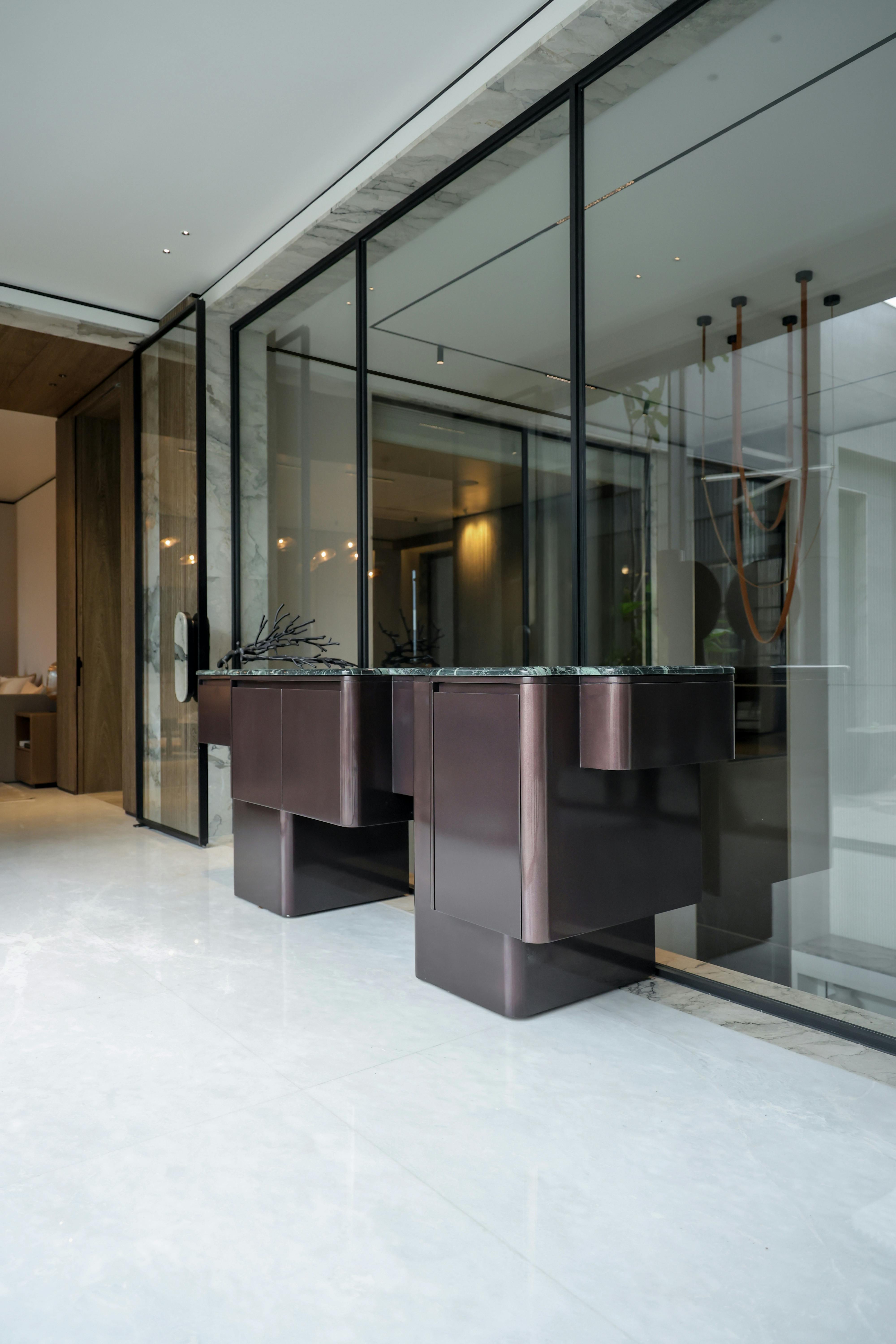
Where profile glass work performs best
- Foyer screens that separate the entrance while preserving natural light.
- Living and dining transitions in broken-plan homes.
- Home office enclosures that need visual connection with better acoustic separation than open desks.
- Wardrobe, dressing, and vanity zones where partial privacy matters.
- Commercial cabins, reception partitions, and meeting spaces that should feel premium rather than boxed in.
How to keep the trend premium instead of decorative
Profile glass systems look expensive when proportions stay disciplined. That means the frame should match the room scale, the glass texture should support the function, and the hardware finish should belong to the rest of the interior palette.
- Use texture with purpose: choose clear, frosted, reeded, or tinted glass based on privacy and maintenance, not only appearance.
- Keep profiles restrained: oversize members can make a modern glass partition feel bulky and dated.
- Coordinate lighting: textured or tinted glass changes how light behaves, especially near warm LEDs and daylight-heavy rooms.
- Review touchpoints: handles, locks, floor guides, and channel details usually decide whether the final work feels refined.
Specification checks before fabrication starts
Good-looking glass systems fail quickly when floor levels, ceiling tolerance, door swing, and cleaning access are ignored. Before fabrication starts, the site should be measured accurately and the final use case should be locked.
- Confirm whether the panel needs toughened, laminated, or another safety glass specification.
- Check floor finish levels and ceiling alignment before fixing channels or frames.
- Resolve handle direction, locking requirement, and daily opening frequency before ordering hardware.
- Review privacy, acoustic expectation, and maintenance access with the client before approving texture or tint.
If you are planning profile glass solutions for a home or office in Surat, compare the concept against real site conditions first, then review similar execution references in our project portfolio. That is usually what separates a trend-led idea from a durable finished result.
“The best profile glass work in 2026 is not the most transparent. It is the one that balances privacy, light, proportion, and installation accuracy.
Blackline Studio
Plan Your Project
Continue With Blackline Studio
Browse executed references, compare service categories, or connect with the team directly from this article.


